 Save
Save I remember the first time I assembled a proper charcuterie platter was at a dinner party where I'd committed to keto, and I was genuinely nervous about what I could actually serve. My friend Sarah, who'd been doing low-carb for years, arrived with this knowing smile and said, "Just give me the good meats, cheeses, and vegetables—that's a feast." That night, watching everyone graze around a platter I'd arranged with care, I realized this wasn't deprivation at all. It was abundance, just arranged differently. Now whenever I need to feed people well without fuss, I return to this moment and build something beautiful.
I served this platter at a quiet Sunday lunch with my family, and my usually picky teenage nephew actually paused mid-bite and said, "Wait, this is good." My mom, who worries constantly that I'm not eating enough on keto, finally relaxed when she saw the protein and fat density arranged right there on the board. That's when I knew this recipe had moved beyond being just a platter—it became proof that eating well didn't mean suffering through salads.
Ingredients
- Sliced roast beef (120 g): The foundation of any proper platter. Buy it sliced from the deli counter rather than pre-packaged—the texture is superior and it costs less. Arrange it loosely so it doesn't clump together.
- Smoked turkey (120 g): Adds a lighter protein without being boring. The smoke brings complexity that makes people pause and ask what they're eating.
- Prosciutto (120 g): This is the one ingredient where quality genuinely matters. Thin, delicate prosciutto melts on the tongue and justifies itself immediately. Roll it loosely for visual interest.
- Salami (100 g, sliced): Choose a good quality salami with a tight, slightly glossy appearance. This brings umami depth and a hint of spice that balances the milder meats.
- Aged cheddar (100 g, cubed): The sharpness cuts through the richness of the meats perfectly. Cube it rather than slice it so it catches light and creates visual texture.
- Gruyère (100 g, sliced): This cheese bridges the gap between sharp and creamy, with a nuttiness that becomes more pronounced as it sits on the platter and slightly warms.
- Manchego (100 g, sliced): A Spanish cheese that brings something different to the table—slightly dry, with a subtle sweetness that no one can quite identify but everyone loves.
- Cherry tomatoes (1 cup, halved): These provide the only sweetness on the platter and they burst with acid, which your palate needs. Leave them whole if you want them to feel more luxurious.
- Cucumber (1 cup, sliced): Cool, crisp, and a necessary palate cleanser. Slice them thicker than you think—thin slices get lost, thick slices feel intentional.
- Radishes (1 cup, sliced): The secret weapon of every platter. They bring peppery heat and an almost impossible crispness that stays no matter how long the board sits out.
- Baby bell peppers (1 cup, sliced): Sweet and crunchy, but use them sparingly if you're strictly tracking carbs. They're worth the small carb bump for the color alone.
- Celery sticks (1 cup): More than just a vehicle for dips—the fibrous crunch and subtle bitterness anchor the heavier proteins and cheeses.
- Green and black olives (1/4 cup each): Briny pockets of flavor that work almost like punctuation marks on the platter. Mix them throughout rather than isolating them.
- Fresh parsley (2 tbsp, chopped): Don't skip this. It brings a whisper of green freshness that makes people feel like they're eating something vibrant, not just heavy proteins.
- Extra virgin olive oil (2 tbsp): A good oil matters here because it's doing the only cooking this platter receives. Drizzle it with intention, not timidity.
- Freshly ground black pepper: Always fresh. Pre-ground pepper tastes like dust compared to what a grinder can do in thirty seconds.
Tired of Takeout? 🥡
Get 10 meals you can make faster than delivery arrives. Seriously.
One email. No spam. Unsubscribe anytime.
Instructions
- Gather your pieces:
- Pull everything out of the refrigerator about 10 minutes before you plan to serve. Cold ingredients are fine, but room-temperature cheeses and meats open up in ways that matter. Slice everything fresh if you can, or arrange pre-sliced items loosely as soon as you get them on the platter—they dry out if you leave them compressed.
- Begin with the meats:
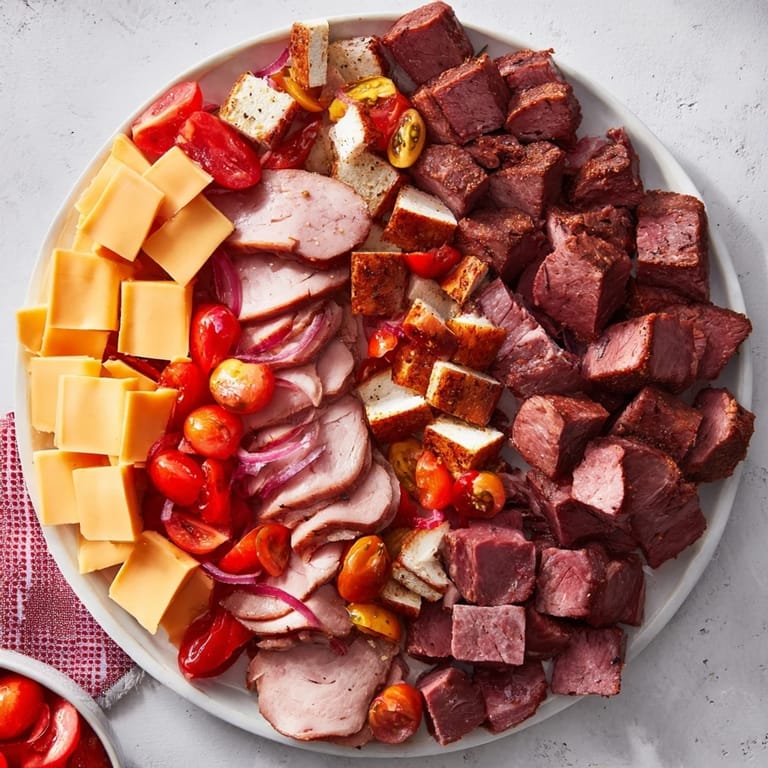
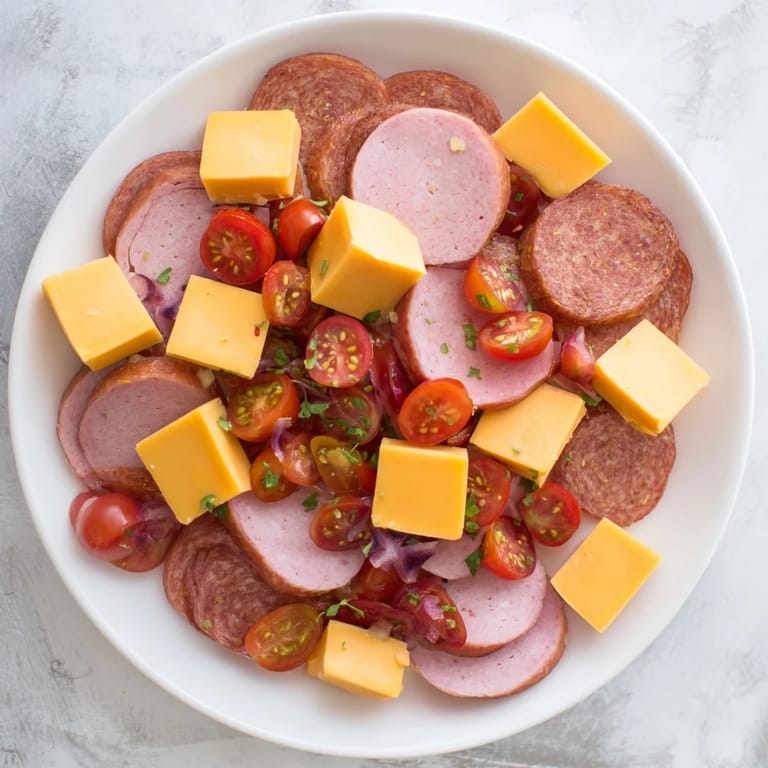
- Start by creating dense, distinct clusters of each meat type. Roast beef in one area, turkey in another. This isn't random—your eye needs to understand what it's looking at. Fold the prosciutto loosely into casual waves. Layer the salami in overlapping circles. You're building architecture here.
- Add the cheese strategically:
- Nestle the cheeses between and around the meats. Cube the cheddar so it catches light differently than the slices of Gruyère and Manchego. Vary the shapes intentionally. If you use all the same size pieces, it reads as monotonous even if it tastes wonderful.
- Fill with vegetables:
- This is where color discipline matters. Don't scatter everything randomly. Create small clusters—a mound of radish slices here, a tight grouping of pepper strips there. This makes the platter feel abundant without chaotic. Reserve some tomatoes and peppers for final garnish around the edges.
- Distribute the olives:
- Scatter them throughout, not in one corner. They're your flavor punctuation and your visual pop. Distribute both colors so you have contrast wherever someone's eye lands.
- Finish with oil and herbs:
- Just before serving, drizzle the olive oil across the vegetables—not the meats or cheese, they don't need it. You want the oil to give the raw vegetables a subtle sheen and add richness. Grind black pepper across the whole thing, then scatter the parsley. This final step takes thirty seconds but it's what makes people think you've spent hours on this.
 Save
Save The moment I understood the power of this platter came when a colleague at work mentioned they were struggling to stick with keto because they were bored. I invited them over on a random Tuesday and we built a board together while talking. They saw how much food was actually there, how satisfying and varied it could be, and something shifted for them. Now they text me board pictures from their own kitchen. Food that looks like celebration tastes like celebration, even when it's just Tuesday.
The Art of Arrangement
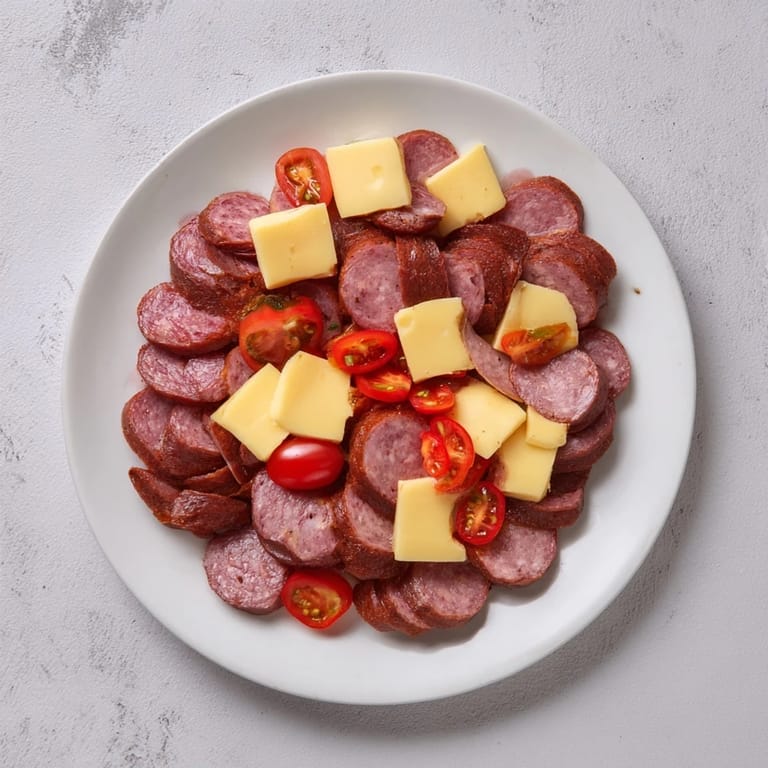
After making dozens of these platters, I've learned that arrangement is actually a form of communication. You're telling people, "This is worth your time. I care about how this looks." The difference between throwing things on a board and actually arranging them is the difference between serving food and creating an experience. Start with your heaviest, most structured items—the meats and cheeses—and use them to anchor sections. Then use vegetables to fill and create movement. It should look almost composed, like you're creating a landscape rather than just feeding people.
Customizing Without Losing the Logic
The beauty of this platter is that it's a framework, not a formula. Swap out the roast beef for smoked salmon if you want something lighter. Replace the Manchego with a creamy Camembert if you prefer that texture. Swap radishes for jicama. The underlying structure—quality proteins, good fats, fresh crunch, balanced flavors—stays constant. What matters is that you're thinking about contrast and balance. Soft against crisp. Sharp against mild. Salty against fresh. Keep those relationships in mind and you can build infinite variations while maintaining the soul of the platter.
Why This Works for Keto
This platter works beautifully for keto not because it's restricted, but because it's complete. You're getting protein from the meats, healthy fats from the cheese and oil, fiber from the vegetables, and enough flavor complexity that your brain registers satisfaction. There's no deprivation here, just a different way of thinking about what a meal looks like. You're not eating small portions of heavy food, you're eating generous portions of everything and they all balance each other. The vegetables provide the carbs, yes, but they come with fiber and they're supporting proteins and fats, which changes how your body processes them.
- Make this your go-to when you need to impress without cooking, especially for guests who are skeptical about your way of eating
- Build it on a board you actually own and are proud of—the platter itself is part of the presentation
- Remember that the best platter is the one you'll actually make, so use ingredients you genuinely love eating
 Save
Save Building this platter has taught me that sometimes the most satisfying meals are the ones that require no cooking at all, just intention. Every time I arrange one, I'm reminded that eating well is about celebrating good ingredients, not restricting yourself.
Recipe FAQ
- → How should the meats be arranged for best presentation?
Group sliced meats by type in dense clusters on a large platter to create visual appeal and easy selection.
- → What cheeses complement this platter?
Aged cheddar, Gruyère, and Manchego provide a variety of flavors and textures that pair well with the meats and vegetables.
- → Can the vegetable selection be substituted?
Yes, non-starchy vegetables like cherry tomatoes, cucumber, radishes, bell peppers, and celery can be swapped based on freshness and preference.
- → What garnishes enhance flavor without overwhelming the dish?
Green and black olives add salty bursts, while extra virgin olive oil and freshly ground black pepper accentuate the flavors. Chopped parsley adds freshness.
- → Is this plate suitable for special dietary needs?
This dish fits keto, low carb, and gluten-free requirements but contains dairy and possibly traces of nuts and gluten from processed meats.
- → What beverages pair well with this platter?
Dry white wine or sparkling water with lemon complement the rich and fresh elements of the plate nicely.