 Save
Save My neighbor handed me a colander full of peas from her garden one April afternoon, insisting I take them before they went bad. I had spaghetti in the pantry and not much else, so I tossed everything into one pot with whatever vegetables I could find. The kitchen smelled like garlic and lemon, and when I tasted it, I couldn't believe something so simple had turned into dinner worth repeating. That accidental meal became my go-to whenever spring arrives and I'm craving something light but satisfying.
I made this for my sister during her first week back from studying abroad, and she said it reminded her of the pasta she ate in a tiny Roman kitchen. We sat on the back porch with our bowls, and she told me stories about cobblestone streets while the basil from my windowsill perfumed the air. It wasn't fancy, but it felt special because we were together again. Food has a way of marking those quiet, important moments.
Ingredients
- Dried spaghetti: The long strands soak up the broth beautifully as they cook, so don't break them unless you really need to fit them in the pot.
- Frozen or fresh peas: Frozen peas work just as well as fresh and save you the trouble of shelling, plus they add a sweet pop of green to every bite.
- Baby spinach: It wilts down to almost nothing, so don't worry if it looks like too much at first.
- Cherry tomatoes: Halving them lets their juices burst into the broth, adding a slight tang that balances the richness of the olive oil.
- Garlic: Slice it thin so it softens quickly and perfumes the oil without burning.
- Red onion: It turns sweet and mellow when sautéed, adding depth without overpowering the delicate vegetables.
- Vegetable broth: This is what cooks the pasta and becomes the sauce, so use a broth you actually enjoy the taste of.
- Olive oil: A good quality oil makes a difference here since it coats everything and carries the garlic flavor through the dish.
- Salt, black pepper, and red pepper flakes: Season as you go, tasting near the end to adjust, and add the red pepper only if you like a little heat.
- Lemon zest: Stir it in at the end for a bright, citrusy lift that wakes up all the other flavors.
- Parmesan cheese: Freshly grated melts better and tastes sharper than the pre-grated kind.
- Fresh basil leaves: Tear them just before serving so they stay vibrant and fragrant.
Tired of Takeout? 🥡
Get 10 meals you can make faster than delivery arrives. Seriously.
One email. No spam. Unsubscribe anytime.
Instructions
- Start with the aromatics:
- Heat the olive oil in a large pot over medium heat, then add the garlic and red onion. Let them sizzle gently for 2 to 3 minutes until the kitchen smells amazing and the onion starts to soften.
- Add everything at once:
- Toss in the spaghetti, peas, spinach, and cherry tomatoes, then pour the vegetable broth over the top and crank up the heat to bring it to a boil. It might look crowded, but everything will settle as it cooks.
- Season and simmer:
- Sprinkle in the salt, black pepper, and red pepper flakes if using, then stir occasionally to keep the pasta from clumping. Let it bubble away, uncovered, for 10 to 12 minutes until the noodles are tender and most of the liquid has been absorbed.
- Finish with brightness:
- Stir in the lemon zest and taste to see if it needs more salt. The zest adds a fresh, sunny note that makes the whole dish feel lighter.
- Serve it up:
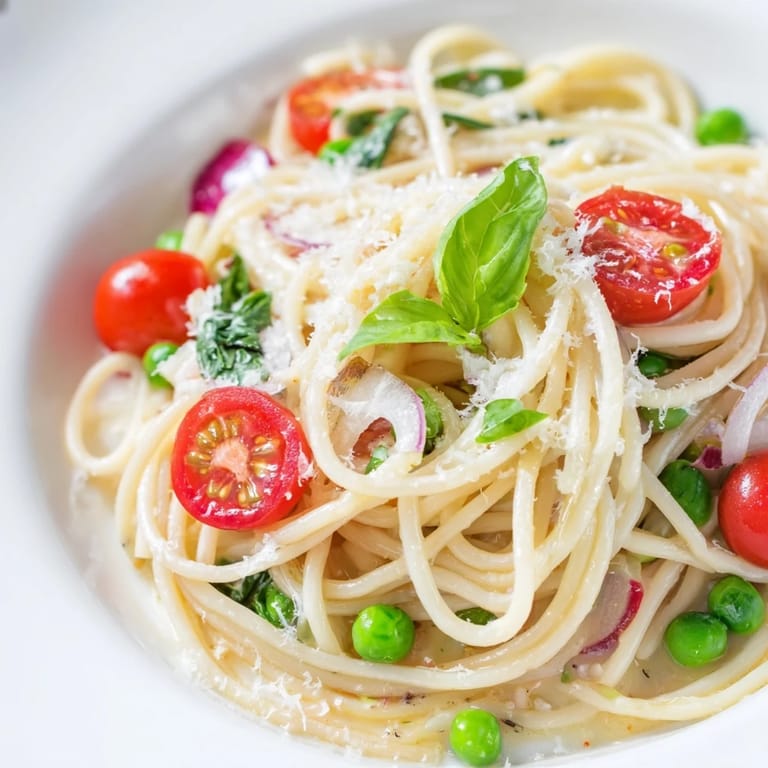
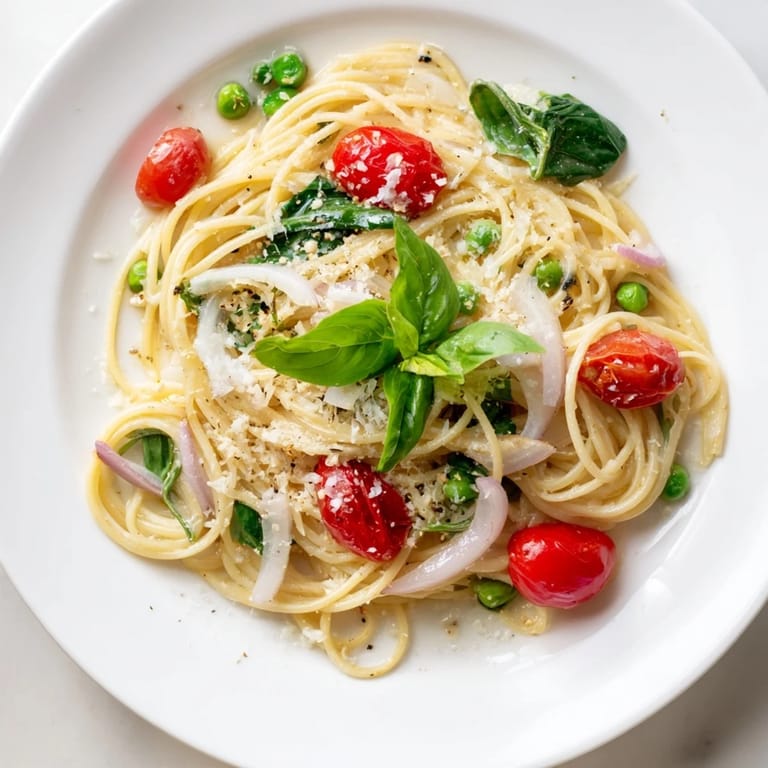
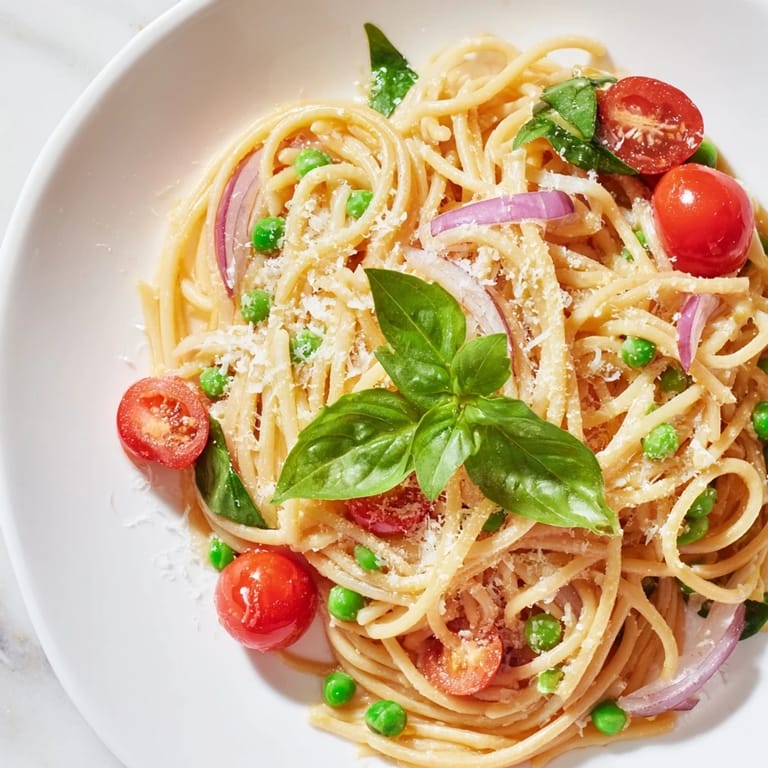
- Divide the pasta among bowls and top each one with a generous handful of Parmesan and a few torn basil leaves. Serve it while it's still steaming.
 Save
Save One evening I served this to a friend who claimed she didn't like vegetables, and she scraped her bowl clean without realizing how much spinach and peas she'd just eaten. She looked up surprised and said it just tasted like really good pasta. That's when I knew this recipe had become one of my secret weapons for feeding people who think they don't like healthy food.
Making It Your Own
This dish is incredibly forgiving, so feel free to swap in whatever vegetables are sitting in your crisper drawer. I've used asparagus, zucchini, and even broccoli florets with great results. Just make sure to cut harder vegetables into smaller pieces so they cook in the same amount of time as the pasta. If you want more protein, a can of drained chickpeas stirred in halfway through adds heartiness without much effort.
Storage and Reheating
Leftovers keep well in the fridge for up to three days, though the pasta will continue to soak up liquid as it sits. When you reheat it, add a few tablespoons of water or broth to loosen it up again, and warm it gently on the stovetop or in the microwave. I actually love it cold the next day as a kind of pasta salad, with a drizzle of extra olive oil and a squeeze of fresh lemon.
Pairing Suggestions
This pasta shines on its own, but if you want to round out the meal, a simple green salad with a lemony vinaigrette or a slice of crusty bread for soaking up the last bit of broth works beautifully. A crisp white wine like Sauvignon Blanc complements the bright, vegetal flavors without competing with them.
- Serve with garlic bread if you want something more filling.
- A side of roasted chickpeas adds crunch and extra protein.
- Finish with fresh berries or a scoop of lemon sorbet for a light, seasonal dessert.
 Save
Save This recipe taught me that the best meals don't always need a long ingredient list or hours of prep, sometimes they just need a little attention and good timing. I hope it becomes one of those dishes you turn to when you want something nourishing without the fuss.
Recipe FAQ
- → Can I use fresh vegetables instead of frozen peas?
Yes, absolutely. Fresh peas work wonderfully and may cook slightly faster than frozen. Simply add them at the same point in cooking and adjust timing if needed.
- → What pasta alternatives work well in this dish?
Whole-wheat spaghetti, spelt pasta, or gluten-free varieties all work excellently. Adjust cooking time slightly according to the package instructions for each type.
- → How can I add more protein to this meal?
A drained can of chickpeas added in step 2 works perfectly. Alternatively, crumbled tofu, white beans, or lentils would complement the spring vegetables beautifully.
- → Is this dish suitable for dairy-free diets?
Yes, simply omit the Parmesan or substitute with vegan cheese. The pasta and vegetables remain naturally plant-based, making this easily adaptable for dairy-free preferences.
- → Can I prepare this ahead of time?
This dish is best enjoyed fresh, but you can prep ingredients the night before. Store cut vegetables separately and cook just before serving for optimal texture and flavor.
- → What wine pairs well with this dish?
A crisp Sauvignon Blanc complements the fresh spring vegetables beautifully. Its acidity balances the richness of the olive oil and Parmesan perfectly.